Prevention at the heart of progress in Burkina Faso
How match financing is supporting the rollout of home fortification using SQ-LNS for the most vulnerable children

Across Burkina Faso, families are navigating an increasingly fragile reality shaped by insecurity, displacement, food shortages and repeated climate shocks. In many regions, accessing health and nutrition services has become harder each year, particularly for communities cut off by violence or living far from basic infrastructure. Global reductions in humanitarian funding have added further pressure, limiting the ability of partners to maintain essential services at the scale required.
For children and women, the consequences are profound. Around one in five children under 5 years of age is affected by stunting, while wasting continues to threaten the lives of hundreds of thousands of children. Maternal undernutrition and anaemia remain widespread, contributing to poor birth outcomes, weakened immunity and long-term developmental risks for children. In areas heavily affected by insecurity and displacement, fragile nutrition programmes are under growing strain.
Against this backdrop, Burkina Faso is demonstrating the importance of national leadership and domestic investment in nutrition. Through the CNF, the Government is working with partners to expand access to essential nutrition interventions while strengthening the country’s ability to sustain services over time.
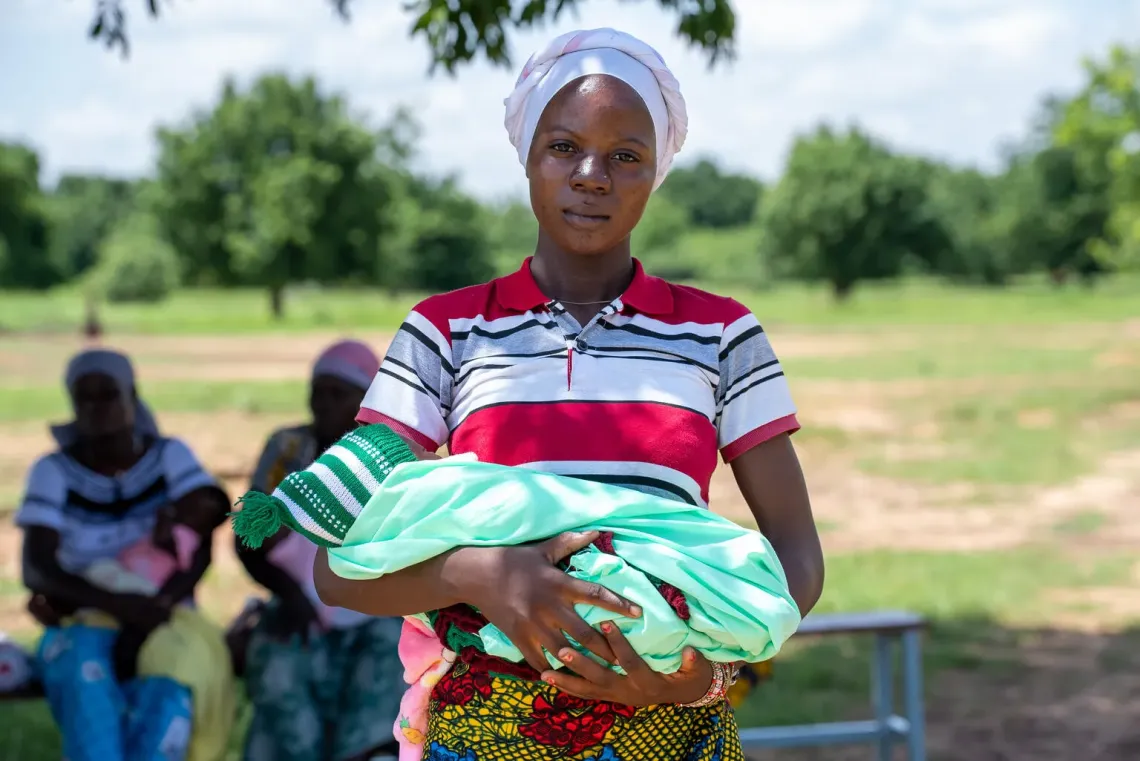
Unlocking greater impact through matched financing
A central pillar of the CNF model is its ability to encourage and amplify domestic investment. In Burkina Faso, this approach helped unlock US$3.9 million of Government financing for SQ-LNS, an important intervention that helps prevent undernutrition among young children during critical stages of development.
In 2025 the CNF matched the Government’s investment, which utilized World Bank resource support, to procure enough SQ-LNS to reach more than 85,000 children. By doubling the financing, the collaboration enabled Burkina Faso to expand access to preventive nutrition support while reinforcing Government ownership of the response.
The investment reflects a broader shift towards more sustainable nutrition financing, with the Government gradually taking a leading role in funding nutrition programmes alongside implementing them. In Burkina Faso, CNF-matched financing in 2025 supported the procurement of more than 53,000 cartons of SQ-LNS, helping expand the national programme into emergency and high-security-challenge regions, including Centre-Est, Est and Sahel.
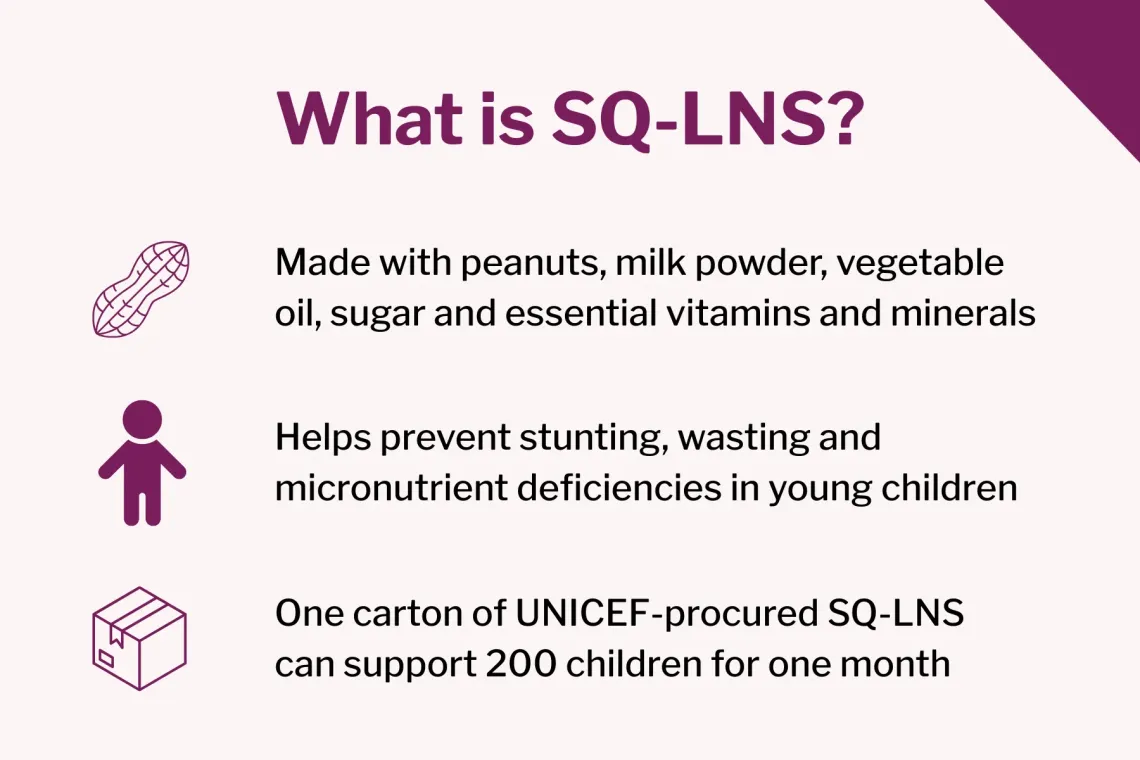
The support builds on a strategy launched in 2022 across pilot regions. Through a community-based delivery platform, community agents distribute SQ-LNS directly to families, including in hard-to-reach areas and localities affected by insecurity, ensuring that children continue to receive nutrition support where needs are greatest.
At a time when external funding is becoming more constrained, this co-financing approach is helping protect nutrition services while giving governments greater capacity to plan, expand and sustain programmes over the long-term. It also sends an important signal: nutrition is increasingly being recognized as a national investment in healthier pregnancies, stronger child growth and better opportunities for children to thrive.
Building on broader CNF support
By also directing grant funding for the highest-need programmes, the CNF is supporting Burkina Faso to strengthen both prevention and treatment services for malnutrition.
In 2025, CNF-enabled procurement provided enough RUTF to help stabilize national supplies and treat 14,000 children with severe wasting in priority districts. Last-mile delivery systems also helped 43,000 children aged 6–23 months receive SQ-LNS as part of the national prevention strategy.
At the same time, infant and young child feeding counselling and community outreach reached more than 63,000 pregnant and lactating women, helping families strengthen nutrition and feeding practices during the earliest stages of life.
While needs across Burkina Faso remain immense, the country’s growing commitment to domestic nutrition financing demonstrates what can be achieved when national leadership is matched with catalytic support. Through its partnership with the Government, the CNF continues to help protect essential services today while laying the foundations for stronger, more resilient nutrition programmes in the future.
Read more stories of progress from Afghanistan, the Philippines and Sudan in the CNF 2025 Annual Report.