Small measures, big hope: How Malawi’s mothers are boosting child nutrition
Empowered mothers and frontline workers are transforming lives

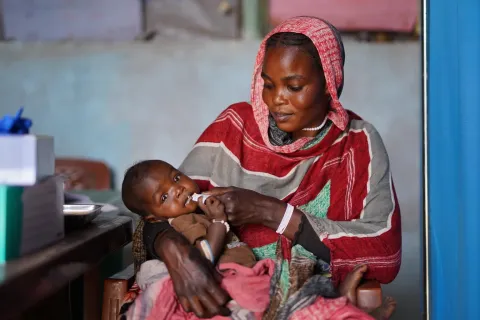
At St Vincent Health Centre in Blantyre district, Pemphero Makina cradles her daughter, Alinafe, as a health worker gently wraps a mid–upper arm circumference (MUAC) tape around the child’s arm to assess her nutritional status.
A few months ago, the nutrition assessment was frightening to Pemphero as it revealed how close she was to losing her child because of malnutrition.
“She had low weight,” she recalls. “She was not able to eat properly and was struggling to play with her friends.”
Alinafe’s MUAC reading had dropped critically low, signalling severe acute malnutrition. For a mother from Lomosi village, the diagnosis was depressing. It felt like a heavy shadow had fallen over her home, a painful sign that her child’s life was in danger amidst her daily struggles to find money for food.
At the same time, this was the turning point for Alinafe’s health, and her mother was determined to fight with everything to bring her back to good health.
Health workers immediately enrolled her in treatment, providing medical care, ready-to-use therapeutic food (RUTF), and counselling to Pemphero on appropriate child feeding practices, including how to prepare nutritious, diversified meals at home.
“With this help, my child’s body weight started improving,” she says. “She got stronger and started playing with her friends again. I am overjoyed to see her like this.”

Health Surveillance Assistant Weston Makupe remembers the day Alinafe arrived at the hospital.
“The life of the child was really under threat. But because of the interventions, they started improving to this day, when she looks very healthy,” he says.
Behind Alinafe’s story of recovery is a quiet yet powerful collaboration between UNICEF and Malawi’s Ministry of Health and Sanitation – funded by the Government of Ireland through the UNICEF-led Child Nutrition Fund (CNF) – which supports efforts to address wasting in children.
The partnership is accelerating Malawi’s progress towards the UN Global Action Plan on Child Wasting by strengthening health systems across seven districts and empowering communities to prevent and manage malnutrition. With Ireland’s sustained support, Malawi is improving national nutrition standards and is now on track to meet the World Health Assembly target of keeping child wasting below 5 per cent by 2030.
Under the partnership, health workers also receive the tools and training critical to their work.
“We have MUAC tapes, height boards, WASH facilities and we receive supplies, including RUTF, on time. We also get quarterly training, which empowers us to do our job properly.”
In neighbouring Zomba district, a similar reality has unfolded in Mwamadi village. There, another mother, Tiyanjane Nelson – who is raising twins – has watched her children grow with starkly different nutrition outcomes: one thriving, while the other suffering from wasting.
She was advised to join Thanzi sessions, community-based learning circles that teach families how to prepare nutritious meals using locally available foods.
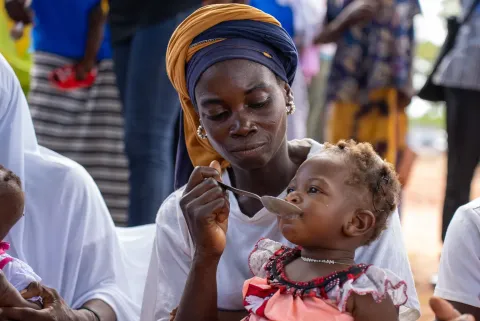
Tiyanjane says that at first, her undernourished daughter, Fortunate, resisted the porridge she prepared. But slowly, she began to like the porridge and other nutritious foods, which helped her recover from wasting.
“She had stopped walking, now she walks properly and even runs. This improvement is because of the Thanzi sessions where I have learned how to combine different foods such as groundnut flour, eggs, vegetables, fruits and rice to provide nutritious meals to my children,” she says.

And with her new backyard garden, Tiyanjane rarely walks long distances for vegetables. Sometimes, she says she even sells the surplus to buy soap or fish.
“I encourage other women to join Thanzi sessions. The sessions help improve the nutrition of the whole household.”
Health Surveillance Assistant Samuel Ndalama says he sees these changes every day.
“Once we identify malnourished children, we counsel parents on the causes. Mostly, it is a lack of diversified food. We teach them how to prepare nutritious meals using what they already have,” says Ndalama.
UNICEF’s Chief of Nutrition, Charity Zvandaziva, says Malawi has faced repeated emergencies such as floods and droughts, which drive food insecurity and contribute to rising numbers of severely malnourished children.
“We appreciate the support from Irish Aid as it helps us procure supplies and train health workers on the newly adapted WHO guidelines.”
But Charity also warns of shrinking global development assistance.
“We need domestic financing for nutrition interventions. We are also advocating for the use of mechanisms like the Child Nutrition Fund, so we can sustain the gains we have made.”
Alinafe and Fortunate now live with improved nutrition that is safeguarding their survival and propelling them into the future. As they laugh while playing with their friends, their stories are small threads in a larger tapestry, a country rebuilding its nutrition systems, one mother and one child at a time.
In these small measures, hope is growing.

Irish Aid’s three-year, €30 million contribution to the Democratic Republic of the Congo, Madagascar and Malawi is supporting UNICEF to strengthen national efforts to prevent, detect and treat child wasting. In years two and three, Irish Aid’s financial contribution is integrated into the UNICEF-led Child Nutrition Fund, a coordination and funding mechanism designed to accelerate the scale-up of sustainable policies, programmes and supplies to end child undernutrition in high-need countries.